

Are Blackout Curtains Worth It? An Honest Assessment
Are blackout curtains worth it? It's a fair question. They cost more than standard curtains, and the claims about sleep improvement, energy savings, and health benefits can sound almost too good to be true. So let's look at the evidence honestly, covering both the genuine advantages and the real limitations.
The short answer for most people is yes, but the value depends on your specific situation. This guide gives you the data to make that call for yourself.
The Genuine Pros
1. Measurably Better Sleep
This is the primary benefit, and the science backs it up convincingly. A 2022 study published in PNAS by Northwestern University researchers found that sleeping in even moderate room light (100 lux) versus near-darkness (less than 3 lux) increased heart rate, decreased heart rate variability, and raised insulin resistance after just one night.
More recently, research from Harvard Medical School published in late 2025 found that people sleeping in the brightest environments had a 56% higher risk of heart failure compared to those in the darkest conditions. These aren't marginal effects.
In practical terms, users of quality blackout curtains consistently report falling asleep faster, sleeping longer, and waking less frequently during the night. For shift workers, parents of young children, or anyone in a bedroom with significant outdoor light, the improvement can be transformative.
2. Real Energy Savings
The U.S. Department of Energy states that thermal curtains can reduce heat loss through windows by up to 25% in winter. In summer, curtains with reflective backings can reduce solar heat gain by up to 33%.
Blackout curtains with thermal properties have an R-value between 2.9 and 3.7, compared to R-1 for standard curtains. That's a meaningful insulation upgrade for every window they cover.
Here's a realistic cost analysis:
|
Scenario |
Estimated Annual Savings |
Payback Period |
|
3 bedroom windows, mild climate |
$50-80/year |
1-2 years |
|
5 windows, hot climate (AC savings) |
$100-200/year |
6-12 months |
|
5 windows, cold climate (heating savings) |
$80-150/year |
8-14 months |
|
Full house, extreme climate |
$200-400/year |
4-8 months |
These figures align with Department of Energy estimates and will vary based on your home's insulation, window quality, local climate, and energy prices. But in most scenarios, blackout curtains pay for themselves within 1 to 2 years through energy savings alone.
3. Privacy
True blackout curtains are completely opaque. When closed, no one can see in, regardless of whether your lights are on or off inside. This is a meaningful benefit for ground-floor bedrooms, street-facing windows, or any room where privacy matters.
Standard curtains, even lined ones, can become somewhat transparent when backlit at night with interior lights on. Blackout curtains eliminate this issue entirely.
4. Noise Reduction
While blackout curtains aren't soundproofing, their heavier, denser fabric does dampen outside noise. Don't expect miracles here. Blackout curtains typically reduce ambient noise by 5 to 10 decibels, which is equivalent to roughly cutting perceived loudness by about one-third.
For bedrooms facing busy streets, this can make a noticeable difference. It won't silence a jackhammer, but it can soften traffic noise, birdsong, and neighbor sounds enough to improve sleep.
5. UV Protection for Furniture
Ultraviolet radiation from sunlight is the primary cause of furniture, flooring, and fabric fading. Quality blackout curtains block 99 to 100% of UV rays, significantly extending the life of hardwood floors, rugs, upholstery, and artwork near windows.
If you have expensive furniture or flooring in sun-facing rooms, the protection blackout curtains provide can save hundreds or thousands of dollars in replacement and refinishing costs over time.
The Honest Cons
1. Higher Upfront Cost
Blackout curtains cost more than basic curtain panels. While budget options exist in the $30 to $50 per panel range, quality blackout curtains typically run $50 to $150 per panel. For a full bedroom with two windows, you're looking at $100 to $600 depending on size and quality.
However, this needs context. A quality mattress costs $500 to $3,000 or more. Blackout curtains deliver a measurable sleep improvement at a fraction of that cost, and the energy savings offset the investment over time.
2. Heavier Than Standard Curtains
The extra layers that block light also add weight. Blackout curtains are typically 2 to 3 times heavier than standard decorative curtains. This means you may need sturdier curtain rods and brackets, which can add to the total cost and installation effort.
For renters using no-drill mounting methods, weight becomes a more important consideration. You'll need to verify that your tension rods or adhesive hooks can support the load.
3. Darkening Can Be Too Effective
This sounds like an odd complaint, but it's real. Some people find that a completely dark bedroom makes it harder to wake up in the morning because there's no natural light cue. If you rely on sunlight to wake you, you'll need an alarm clock or a sunrise alarm that gradually brightens.
Additionally, a pitch-dark room during the day can feel oppressive to some people. If you work from home in your bedroom, you'll be opening and closing curtains frequently.
4. Style Limitations (Historically)
This used to be a significant downside. Early blackout curtains were heavy, stiff, and came in limited colors, mostly dark. Modern blackout curtains have largely overcome this limitation, with options now available in every color, pattern, and style from minimalist to traditional.
That said, the most affordable blackout curtains still tend to feel more utilitarian than decorative. If aesthetics are a high priority, expect to spend more for panels that both look good and block light effectively.
Cost Breakdown: Blackout Curtains vs. Alternatives
|
Solution |
Cost |
Light Blocking |
Lifespan |
Annual Cost |
|
Quality blackout curtains |
$80-300 |
99-100% |
5-10 years |
$8-60/year |
|
Budget blackout curtains |
$30-80 |
85-95% |
2-4 years |
$8-40/year |
|
Blackout blinds |
$100-500 |
90-98% |
5-10 years |
$10-100/year |
|
Sleep mask |
$10-40 |
100% (eyes only) |
6-12 months |
$10-80/year |
|
Blackout window film |
$15-50 |
95-99% |
1-3 years |
$5-50/year |
|
Aluminum foil (DIY) |
$5 |
95-100% |
1-3 months |
$20-60/year |
Quality blackout curtains have the lowest annual cost when you factor in their lifespan. A $200 set that lasts 8 years costs $25 per year, less than most sleep supplements and a fraction of other sleep-improvement purchases.
Who Benefits Most from Blackout Curtains
Blackout curtains deliver the most value for certain groups:
-
Shift workers. If you sleep during daylight hours, blackout curtains are essentially non-negotiable. There's no other way to simulate nighttime conditions during the day.
-
Parents of young children. Babies and toddlers are more sensitive to light than adults, with melatonin suppression occurring at much lower light levels. A dark nursery directly improves infant sleep duration and quality.
-
Light sleepers. If early morning light wakes you before your alarm, blackout curtains can extend your sleep by 30 to 90 minutes.
-
People in northern latitudes. During summer months, the sun rises as early as 4 to 5 a.m. in northern regions. Without blackout curtains, your body gets a wake signal hours before you intend to rise.
-
Hot climate residents. The combination of sleep benefits and cooling energy savings makes the ROI particularly strong in warm climates.
-
Street-facing bedrooms. Streetlights, car headlights, and commercial signage can flood bedrooms with light throughout the night.
-
Anyone with sleep issues. If you struggle with sleep onset, nighttime waking, or poor sleep quality, darkness is the lowest-hanging fruit to address.
Who Might Not Need Them
To be fair, blackout curtains aren't essential for everyone:
-
Rural residents with minimal light pollution. If your bedroom is naturally dark at night and you wake after sunrise, standard curtains may be sufficient.
-
People who rely on sunrise to wake. If natural morning light is your preferred alarm and you have no trouble sleeping, total blackout may interfere with your routine.
-
Rooms that need natural light. If a room doubles as a home office or living space and you'd be opening and closing the curtains constantly, the hassle factor increases.
Even for these groups, the energy savings and UV protection may still justify the purchase. But the sleep benefits, which are the primary selling point, are less impactful if you already sleep well in your current environment.
ROI Analysis: The Numbers
Let's run a realistic ROI scenario for an average household:
-
Investment: $250 for quality blackout curtains covering 3 bedroom windows.
-
Energy savings: $100 per year (conservative estimate based on Department of Energy data).
-
UV protection: $50 per year in avoided furniture/flooring degradation (conservative estimate for sun-facing rooms).
-
Sleep improvement value: Difficult to quantify in dollars, but consider that the average American spends $174 per year on sleep aids and supplements. Many users report reducing or eliminating these after installing blackout curtains.
-
Lifespan: 7 years (average for quality blackout curtains).
Total tangible savings over 7 years: approximately $1,050 in energy and UV protection alone. On a $250 investment, that's a 420% return, or roughly 60% annualized. Add in reduced spending on sleep aids and the health benefits of better sleep, and the ROI becomes even more compelling.
Making the Right Choice
If you've read this far and you're leaning toward getting blackout curtains, here's what will maximize your investment:
-
Prioritize light-blocking quality. The difference between 90% and 100% light blocking is the difference between an improvement and a transformation. Don't settle for 'room darkening.'
-
Get the sizing right. Curtains that are too small leave light gaps that undermine the entire purpose. Measure carefully and order generously.
-
Consider the full system. Edge sealing, proper installation, and addressing other light sources in the room are as important as the curtain fabric itself.
-
Buy quality once. Cheap blackout curtains that degrade after 2 years cost more in the long run than quality panels that last 7 to 10 years.
The Bottom Line
Are blackout curtains worth it? For the majority of people, absolutely. The combination of measurable sleep improvement, real energy savings, privacy, UV protection, and noise reduction makes blackout curtains one of the highest-value home purchases available.
The investment is modest compared to other sleep interventions, the payback period through energy savings alone is typically under 2 years, and the health benefits of sleeping in complete darkness are backed by research from the world's top institutions.
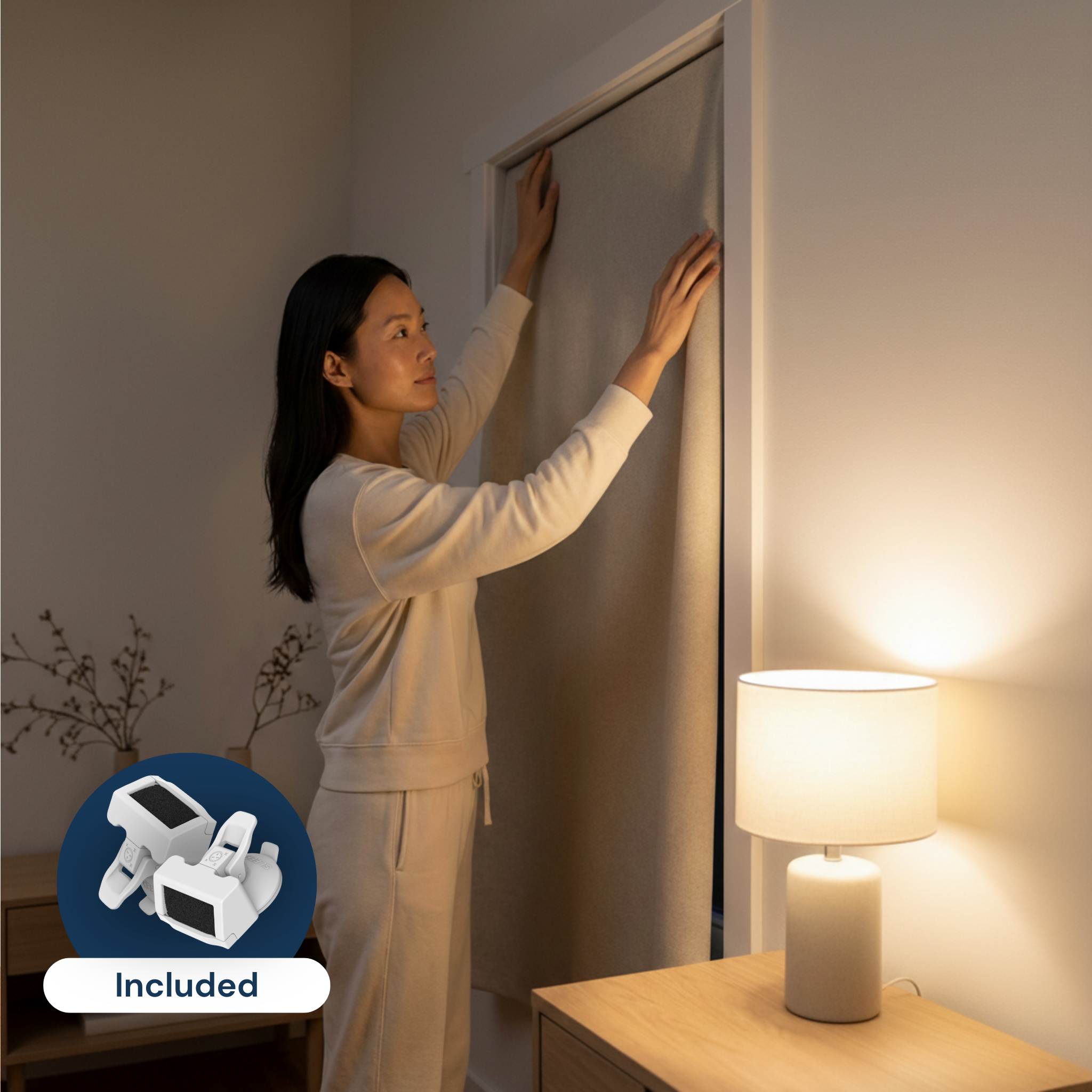
Sleepout blackout curtains deliver 100% light blocking with edge-sealing technology, quality construction built to last, and a design that looks good in any bedroom. If better sleep, lower energy bills, and a healthier home environment sound worth it to you, they are.